2026 How to Choose the Best Full Sleeper Sofa?
A full sleeper sofa has two jobs: it must feel inviting at six in the evening and sleep well at midnight. The wrong choice shows quickly. A sagging seat, thin mattress, or blocked doorway can turn a small room into a daily compromise.
The 2024 U.S. Houzz & Home Study reported a $24,000 median renovation spend among renovating homeowners in 2023. That figure covers home projects broadly, not sleeper sofas, but it signals why careful purchasing matters. The U.S. Census Bureau’s 2023 American Community Survey places average household size at about 2.5 people. Neither statistic predicts sofa demand; both offer context for rooms that must serve several needs.
Interior designer Nate Berkus has said, “Your home should tell the story of who you are, and be a collection of what you love.” That principle is useful here, but style alone is not a buying test. Measure the room, doorway, and fully opened bed area. Then compare mattress dimensions, seat depth, frame construction, upholstery, and warranty terms. Ask whether the sofa will be used nightly or only for occasional guests. That changes the priorities.
Measure twice. Open the mechanism in the showroom if possible. Check the mattress yourself, not just the cushions. A little awkward? Perhaps. Better than discovering a hard bar beneath the sheets. This guide explains how to choose a full sleeper sofa by balancing comfort, durability, fit, and price—without treating one attractive product photo as proof of quality.
What Defines a Full Sleeper Sofa in 2026?
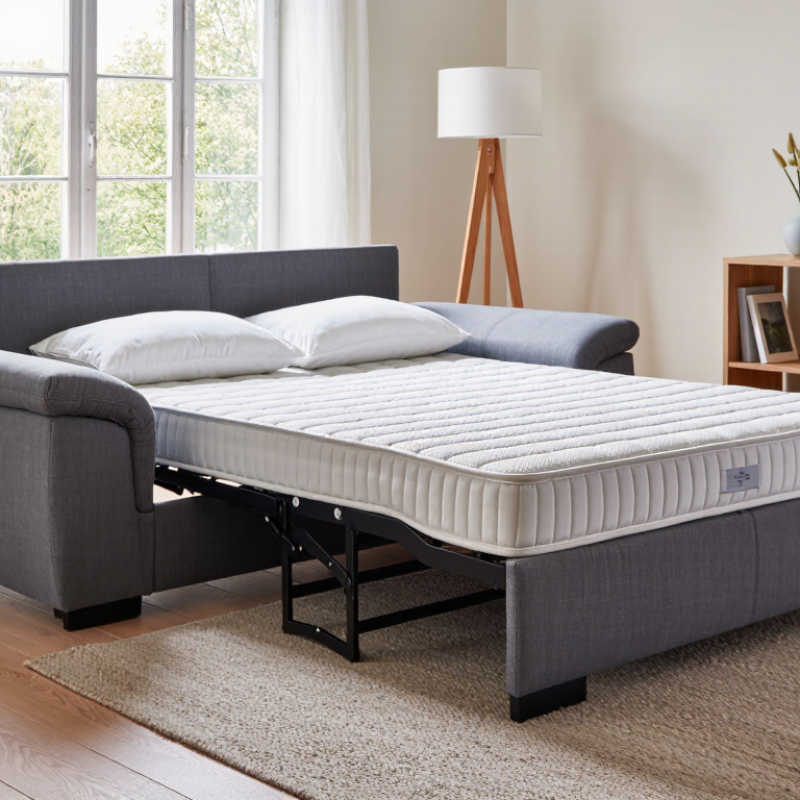
In 2026, “full” describes the bed, not the sofa’s outside width. Sleep Foundation’s mattress-size guide lists a full mattress at about 54 by 75 inches. That gives shoppers a useful benchmark, not a guarantee: upholstery, frame design, and the folding mechanism can reduce the actual sleeping area. Measure the open bed, not just the sofa in the showroom. Check the room’s walking space, too.
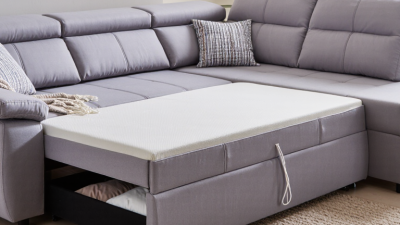
A full sleeper sofa should unfold into a stable, usable sleeping surface and return to seating without awkward strain. Look for a supportive deck, a mattress that lies flat, and a mechanism that clears nearby walls and tables. Small details matter. A thick arm can make the sofa wide while leaving the bed unchanged. ANSI/BIFMA X5.4 sets performance requirements for lounge seating, but it does not establish mattress comfort or define “full” for sleeper sofas. I would treat any size label as a starting point, then verify the product’s exact open-bed measurements and weight limits. A spec sheet can still leave out useful details, such as mattress thickness or clearance behind the sofa.
Assess Your Space, Sleeping Needs, and Budget
2026 How to Choose the Best Full Sleeper Sofa?
Assess Your Space, Sleeping Needs, and Budget
Start with the room, not the showroom. Measure the sofa’s full footprint when open, including walking space beside the bed. Measure twice. Check doorways, stair turns, and the route from delivery entrance to living room. The U.S. Census Bureau reported a 2,286-square-foot median floor area for new single-family homes in 2023, but that figure says little about your own tight hallway or compact apartment. Your room measurements matter more.
Next, consider who will sleep on it and how often. AASM and Sleep Research Society guidance recommends adults get at least seven hours of sleep regularly. That makes mattress support and usable sleep-deck dimensions worth checking, not just the sofa’s appearance. Compare the opened bed with a standard full mattress, and ask about mattress thickness, frame support, and replacement options. Try lying down if possible. A sofa that fits neatly can still sleep poorly.
Set a total budget, not just a sofa price. Include delivery, assembly, protective covers, and any topper or replacement mattress you may need. Inspect the frame and opening mechanism in person; a stiff pull-out may become annoying with nightly use. There is a trade-off here: compact models can save floor space, yet feel cramped for two adults. I find that part awkward. Choose based on actual sleep habits, and leave a little room for uncertainty.
2026: How to Choose the Best Full Sleeper Sofa
Assess your space, sleeping needs, and budget
How to use this chart: A full mattress provides about 28.1 square feet of sleeping surface—more than a twin and less than a queen. These figures are calculated from nominal U.S. mattress dimensions: twin 38 × 75 in, full 54 × 75 in, and queen 60 × 80 in. Sleeper sofa mattresses and open-bed footprints can vary, so check the product’s exact dimensions and measure your room, doorways, and walkways. Compare current prices against your budget before choosing.
Compare Mattress Types and Sleeping Comfort
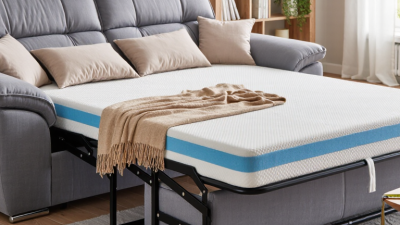
A full sleeper sofa can feel very different from a regular bed, even when both use a full-size mattress. In 2026, compare the mattress itself, not just the sofa’s appearance. Innerspring models often feel familiar and springy, but thin padding may let you feel pressure points. Memory foam can cushion shoulders and hips, though some sleepers find it warm or slow to respond. Air-over-coil designs combine an inflatable layer with springs; they may offer adjustable firmness, but the pump and setup add another step.
Check the mattress dimensions and thickness, since sofa beds do not always match standard full beds exactly. Lie down for several minutes if you can. Notice whether your lower back stays supported and whether the center bar presses through the mattress. A showroom test helps, but it cannot predict how the bed will feel after a full night. That part is tricky.
Think about who will use it and how often. A guest staying one night may tolerate a firmer surface, while frequent use calls for steadier support and an easy opening mechanism. Ask how the mattress folds and whether its cover can be cleaned. Also measure the room with the bed fully extended. A small detail: leave walking space beside it. Comfort is personal, and I would not assume the thickest mattress is automatically best; the frame beneath it matters just as much.
Evaluate Frame Quality and Opening Mechanisms
For a full sleeper sofa, inspect the frame where the arms meet the seat and around the hinge mounts. These joints take strain every time the bed opens. Look for tight, even connections and cross-supports beneath the seat; a heavy frame alone proves little. The USDA Forest Products Laboratory’s 2021 Wood Handbook (FPL-GTR-282) notes that indoor wood commonly equilibrates near 6–8% moisture, while moisture changes can affect its dimensions and strength. Ask whether solid-wood parts are properly dried, and check for rough edges, loose fasteners, or visible cracks. A quick showroom check cannot reveal years of wear. Still, it can catch obvious flaws.
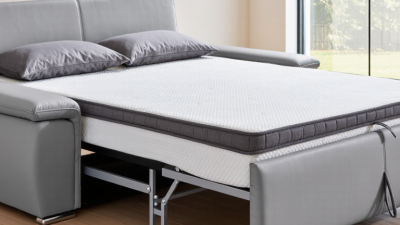
Operate the mechanism yourself. Pull the bed out slowly, then close it without lifting or forcing the frame. The platform should travel evenly, lock securely, and leave no metal parts rubbing against the upholstery. Listen closely. Clicking or scraping deserves a question. Check that the mattress support sits level and that the folded sections do not sag under light pressure. EN 1728, a European seating test standard, evaluates strength and durability through repeated loading; ask whether the sofa’s frame or mechanism has been tested to a relevant furniture standard. Not every seller can provide test details, and that gap matters. Try the opening cycle more than once, even if it feels a little awkward.
Check Dimensions, Upholstery, and Long-Term Care
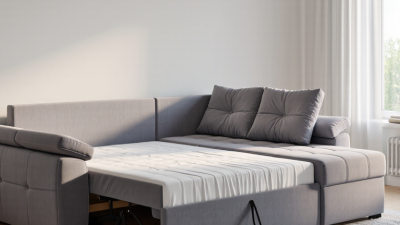
Measure a full sleeper sofa in both its closed and fully opened positions. Note the room’s narrowest walkway, nearby tables, and the distance to doors. A sofa may fit neatly against the wall yet block a path when the bed unfolds. Check the mattress dimensions, too; “full” does not guarantee the same usable sleeping space across designs. Measure twice.
Upholstery affects daily comfort and how much care the sofa needs. Tightly woven fabrics can be practical in busy rooms, while textured materials may catch crumbs or pet hair. Feel a sample in daylight, and check how its color changes beside your flooring. Ask for the fabric’s cleaning instructions before buying. A pale cover can look lovely, but it may demand more attention than expected.
Long-term care starts with small routines: vacuum seams, remove loose debris, and blot spills rather than rubbing them. Follow the care label, and test any approved cleaner on a hidden area first. Rotate or fluff removable cushions when the construction allows it. Also inspect the sleeper mechanism occasionally for trapped fabric or debris. I would not treat a care label as a promise of effortless upkeep; real homes are messier, and that deserves honest thought.