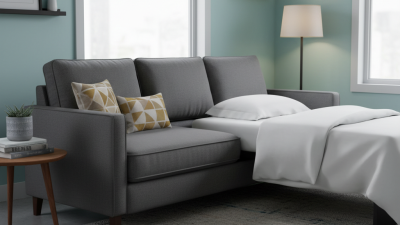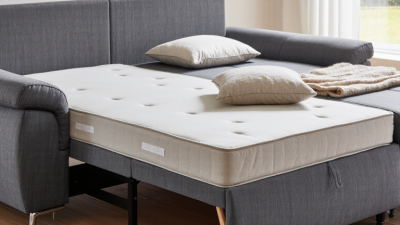


Choosing a sleeper sofa is not only about appearance. It affects daily comfort, sleeping quality, and available living space. A stylish frame may look perfect online, yet feel hard after one night. This guide explores ten practical tips for buying the best sleeper sofa, based on comfort, construction, usability, and long-term value.
Start with the room measurements. Record the sofa’s width, depth, height, and fully opened length. Leave space for walking around the bed. A measuring tape prevents expensive surprises. Check the mattress thickness, support system, and folding mechanism. Memory foam can reduce pressure, while innerspring designs may feel more familiar. Neither option suits everyone. Personal testing still matters.
Sit on the cushions for several minutes. Open and close the bed if the showroom allows it. Notice sharp edges, uneven movement, or noisy hinges. Examine the fabric under bright light. Tight weaves often handle everyday use better, but durability depends on more than appearance. Ask about the frame materials, weight capacity, cleaning instructions, return policy, and warranty. Reliable sellers should answer clearly and provide written details.
Do not ignore delivery access. A sofa can fit the room but fail at the doorway. Measure elevators, hallways, and turning points. I have learned that small omissions create the biggest problems. Reviews can reveal recurring issues, but they are personal experiences, not absolute proof. Compare several models before deciding. The best sleeper sofa balances comfort, function, craftsmanship, and realistic household needs. 恒一
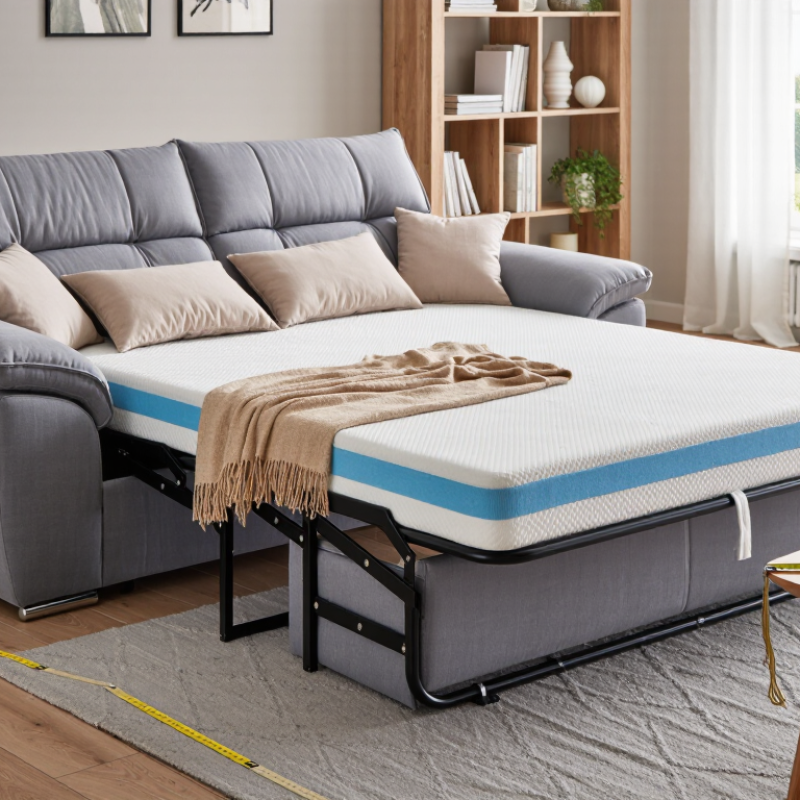
Buying the best sleeper sofa starts with two clear priorities: how well it supports sleep and how comfortably it serves daily seating. Do not compare ten models until these needs are written down. A regular sleeper may need a wider mattress, firmer support, or better airflow for frequent overnight use. A guest sofa may only need basic comfort and easy conversion.
I once chose a sofa with attractive cushions but ignored its sleeping surface. The frame felt solid, yet the mattress sagged near the middle. That was a mistake. Measure twice. Record your preferred mattress width, firmness, and minimum thickness. Then check the sofa’s open length, especially in a narrow room. Leave walking space around the bed mechanism.
For seating, define your preferred seat depth, cushion firmness, and back height. Sit for at least ten minutes if possible. Notice whether your feet touch the floor and whether the edge presses behind your knees. A reliable comparison also includes frame construction, weight capacity, cleaning instructions, and warranty terms. Check these details against the manufacturer’s specifications, not only showroom impressions. Some mechanisms feel smooth once but become awkward during repeated use. Test the opening motion several times. If one priority conflicts with the other, admit it early; a deeply cushioned sofa may sleep poorly, while a supportive mattress can make daily sitting feel rigid.
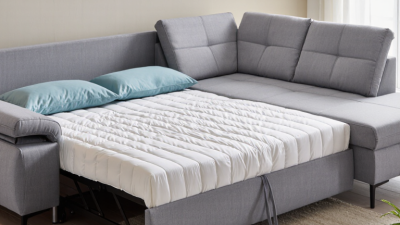
Buying the best sleeper sofa begins with a tape measure, not a fabric sample. Use 32 inches of clear width as a practical egress benchmark for doors and escape paths. Local building rules may differ, so confirm the requirement with your property manager or local authority. Measure the actual opening, not the door’s listed size. Include the frame, hinges, trim, and threshold.
Record the narrowest point from the entrance to the room. Measure hallways, stair turns, elevator doors, and tight corners. A sofa may fit through a doorway but fail at the first turn. I once underestimated a hallway by two inches; the delivery crew had to remove the door. That mistake was avoidable. Sketch the route and mark obstacles, including radiators, railings, and wall shelves. Protect the wall corners before delivery.
Then measure the sofa in three conditions: closed, partially opened, and fully converted into a bed. Leave walking space around the open mattress, especially beside emergency exits. Keep at least 32 inches of usable passage where possible, without counting cushions or movable tables. Check ceiling height near stair landings. Ask for packaged dimensions, because cartons can be wider than the sofa. Avoid relying on showroom measurements alone. Your room may expose a flaw the display floor hides. Recheck every number before ordering, and keep the written measurements for delivery day.
| No. | Buying Tip | Measurement or Specification | Practical Target | Why It Matters |
|---|---|---|---|---|
| 1 | Measure the narrowest entry point | Record the clear width after removing the door slab, if possible. | At least 32 in (81 cm) of unobstructed passage is a useful planning benchmark; verify local code requirements. | The shipping package or sofa frame must pass through the actual opening, not just the room entrance. |
| 2 | Check the full delivery pathway | Measure hallways, turns, stair landings, elevator doors, and ceiling height. | Use the smallest width and height found along the route. | A sofa that fits the front door may still fail at a tight corner or stair landing. |
| 3 | Compare packaged and assembled dimensions | Obtain carton dimensions and the sofa’s narrowest orientation from the seller or manufacturer. | Allow at least 1–2 in (2.5–5 cm) of handling tolerance where the route permits. | Packaging can be wider, taller, or less flexible than the assembled product. |
| 4 | Measure the open-bed footprint | Measure the sofa’s total length and depth when the sleeper mechanism is fully extended. | Keep roughly 24–30 in (61–76 cm) of usable clearance at the foot of the bed when possible. | The bed needs room to open and enough circulation space for safe use. |
| 5 | Confirm the sleeping surface size | Check the actual mattress width and length rather than relying only on labels such as “full” or “queen.” | Common reference sizes include twin: about 38 × 75 in, full: 54 × 75 in, and queen: 60 × 80 in. | Sleeper-sofa mattresses may differ from standard residential mattress dimensions. |
| 6 | Evaluate mattress thickness and support | Review mattress thickness, support type, maximum user weight, and the presence of a center support system. | Choose a thickness and support level appropriate for the expected frequency of use. | A thinner mattress may save space but can affect comfort, durability, and pressure distribution. |
| 7 | Check seat height and depth | Measure the floor-to-seat height and front-to-back seat depth with cushions installed. | Many adults find approximately 17–19 in (43–48 cm) seat height comfortable, but body proportions vary. | A sleeper sofa must work as both everyday seating and an occasional bed. |
| 8 | Measure wall, window, and outlet clearances | Map baseboards, radiators, vents, windows, outlets, and nearby furniture. | Leave enough space for ventilation, cable access, and the manufacturer’s required wall clearance. | A reclining or folding mechanism may require more clearance than the sofa’s closed depth suggests. |
| 9 | Test the opening mechanism | Open and close the bed several times, checking locks, hinges, handles, and floor contact. | The mechanism should operate smoothly without excessive lifting, binding, or scraping. | A difficult mechanism can discourage regular use and may damage flooring or hardware. |
| 10 | Plan for safe egress and everyday circulation | Keep doors, primary walkways, and emergency exit routes unobstructed when the bed is open. | Use 32 in (81 cm) as a planning reference for a clear passage, while confirming applicable building and fire codes. | The 32-inch benchmark helps identify potentially restrictive pathways, but it is not a universal substitute for local code requirements. |
Measurement note: Measure clear openings at their narrowest point, account for door hardware and trim, and confirm all dimensions with the product’s current specification sheet. Building, accessibility, and fire-safety requirements vary by location.
10 Tips for Buying the Best Sleeper Sofa
Mattress thickness deserves more attention than decorative fabric. A 5-inch mattress saves space, but it may feel firm under the hips and shoulders. A 6-inch mattress usually provides better cushioning, especially for side sleepers. However, thickness alone does not guarantee comfort. Consumer Reports’ mattress-testing guidance emphasizes foam density, support layers, and pressure relief over height alone. Check the unfolded surface in person. Sit, lie down, and notice the frame beneath you.
Lifespan matters just as much. The Better Sleep Council commonly places mattress replacement around seven to ten years, depending on materials, usage, and care. A sleeper sofa may age faster because its mattress folds repeatedly and supports irregular weight. Ask whether the mattress uses high-resilience foam, internal coils, or reinforced edges. Request written warranty terms. A vague promise is not useful.
Measure twice.
For occasional guests, a 5-inch mattress may be practical and easier to store. For nightly sleeping, a 6-inch mattress is the safer comparison point, but it still needs proper base support. Rotate the mattress when permitted, keep the mechanism clear, and avoid sitting heavily on its edge. These details seem minor. They are not. My checklist would still be incomplete without testing the sofa after ten minutes, because first impressions often hide pressure points.
10 Tips for Buying the Best Sleeper Sofa
A sleeper sofa must serve two jobs, so inspect more than its fabric and color. Press each frame corner and listen for movement, creaks, or hollow sounds. A rigid, well-jointed frame usually handles repeated sitting better. Ask whether the frame has undergone applicable ANSI/BIFMA performance testing. The standard matters more than vague claims like “commercial quality.” Request test records, not just a printed badge.
Test the opening mechanism in the showroom. Pull it out slowly, then close it without forcing the bars or hinges. It should move smoothly and lock securely. Check that the bed platform sits flat, with no sharp edges or exposed hardware. Relevant ANSI/BIFMA evaluations may examine durability, stability, strength, and repeated-use performance. They do not automatically guarantee comfort. That part still requires your own judgment.
Lie on the mattress for several minutes. Notice pressure under your hips and shoulders. Sit on the sofa edge, where weak support often reveals itself. Remove the cushions and inspect the seams, foam shape, and recovery after pressing them firmly. Ask about cushion density, compression testing, and expected softening over time. I once trusted a thick cushion that looked luxurious; it flattened quickly. My mistake was testing appearance instead of rebound. Standards provide useful evidence, but a sofa can pass testing and still feel wrong in your room. Measure doorways, turning space, and the fully opened bed area before paying.
A sleeper sofa deserves the same scrutiny as a mattress and a small bed frame. Ask for foam details, not vague claims like “eco-friendly.” The U.S. Environmental Protection Agency reports that indoor pollutant levels can be two to five times higher than outdoor levels. New foam may release odors during unpacking. Request emissions information, ventilation guidance, and any independent certification. Open the package in a well-ventilated room. My checklist is not perfect, because odor alone cannot prove safety.
Check the published weight capacity for both seating and sleeping. These figures may differ. Confirm whether the limit covers one person, two people, or total load. The Business and Institutional Furniture Manufacturers Association publishes seating test methods, but laboratory testing does not replace a clear product limit. Ask about frame joints, sleeper mechanisms, and support legs. A sofa that feels sturdy in a showroom may flex differently on a thin apartment floor.
Read warranty terms before paying. The Federal Trade Commission advises consumers to review written warranty coverage, exclusions, and repair duties before purchase. Look for separate coverage periods for fabric, foam, frame, and mechanism. Also verify the return window, restocking fees, pickup charges, and damage requirements. Photograph the sofa before assembly. Keep the packaging longer than feels necessary. That part is inconvenient, but return disputes often depend on evidence. An impressive warranty can still be weak if labor and shipping are excluded.