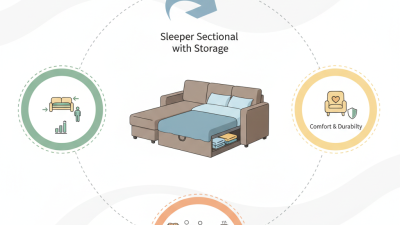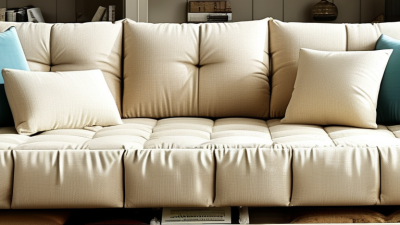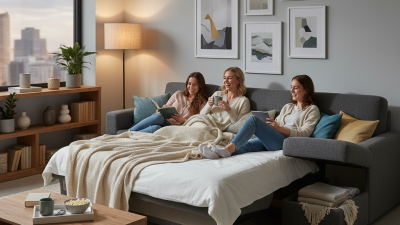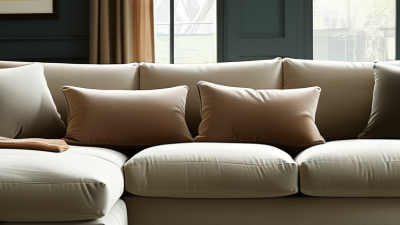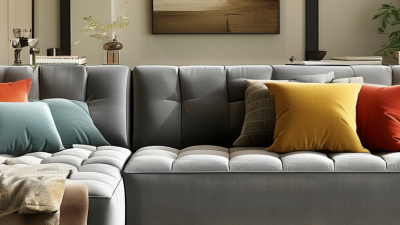


A sleeper sectional with storage is more than a sofa that opens into a bed. It combines everyday seating, a hidden sleeping surface, and built-in space for blankets, pillows, or seasonal linens. In a compact apartment, that combination can replace several bulky furniture pieces.
The storage may be located beneath a chaise, inside a lift-up seat, or within an attached ottoman. Imagine opening the compartment and finding a folded quilt instead of cluttered baskets. When guests arrive, the sectional can transform from a relaxed lounge into a practical sleeping area. The mechanism, mattress thickness, and fabric quality determine whether that transformation feels effortless or frustrating.
Interior designer and home furnishings expert Annie Selke has said, “A room should feel collected, not decorated.” Her idea applies well here. A well-chosen sleeper sectional with storage should support the room’s function without making it look overfilled. It needs to match the space, not dominate it.
Still, this furniture is not perfect. Some models feel heavy, and certain sleeper mattresses may seem firmer than expected. Storage compartments can also be smaller than product photos suggest. These details deserve honest attention before purchase.
The best choice depends on room dimensions, sleeping frequency, access to the storage area, and personal comfort preferences. Measuring doorways matters, too. A beautiful sectional is useless if it cannot pass through the entrance. This guide explains how the design works, what features deserve scrutiny, and where its practical benefits may include compromises.
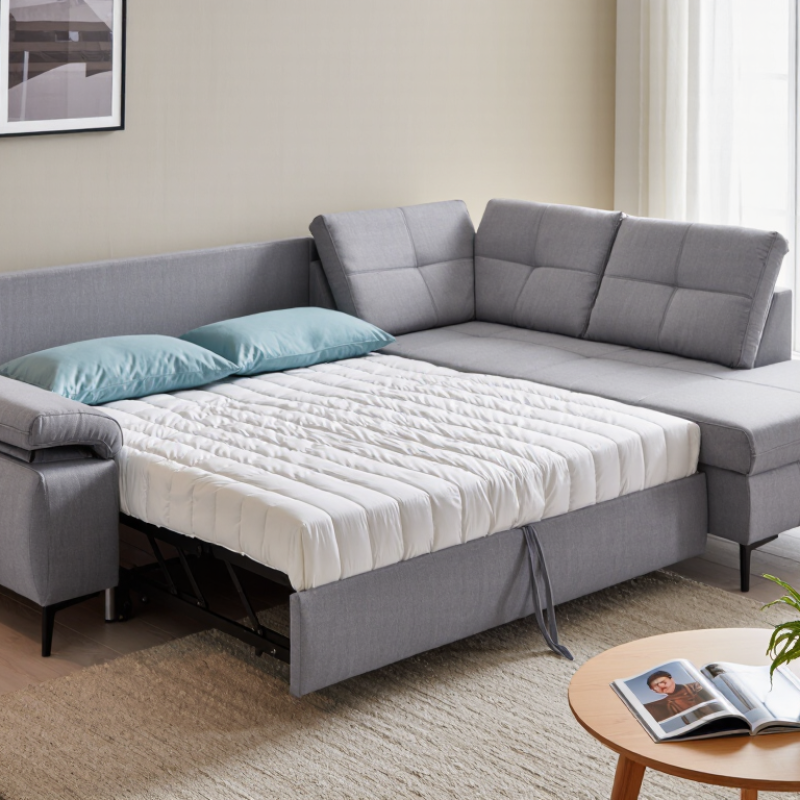
A sleeper sectional with storage is a modular sofa that combines seating, a sleeping surface, and concealed compartments. Its core purpose is space efficiency. The sectional may include a pull-out mattress, fold-down backrest, or lift-up chaise. Storage usually sits beneath the chaise or inside an ottoman. These spaces can hold blankets, pillows, books, or seasonal items.
The design responds to smaller, harder-working homes. The U.S. Census Bureau’s 2023 American Community Survey reports an average U.S. household size of 2.60 people. That figure does not define furniture demand, but it shows why flexible rooms matter. Grand View Research estimated the global furniture market at approximately $766 billion in 2023. Its analysis also identifies multifunctional furniture as a continuing growth area. A sleeper sectional fits that shift, especially in apartments and guest rooms.
Core features require careful checking. Measure the sofa, opened bed, and walking clearance. Many models need 80 to 95 inches of forward space when extended. Confirm the mattress thickness, support structure, and weight rating. A storage compartment is useful only when its opening remains accessible. Lift-up storage may work better than drawers on thick rugs. The mechanism should operate smoothly without excessive force. It should also lock securely when closed.
Comfort can be uneven. A sofa may feel excellent but sleep poorly. Storage capacity may reduce cushion depth. Upholstery can also trap heat. These trade-offs deserve honest testing, not just attractive photographs. Sit, open, close, and lie down before deciding. Measure twice. Fancy mechanisms cannot fix a poor fit.
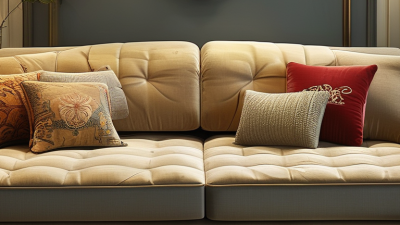
A sleeper sectional with storage combines seating, a bed, and space for blankets in one frame. Its hidden mechanism changes the sofa’s shape within a few controlled movements. In a pull-out design, the seat cushions lift away, revealing a folded mattress platform. The platform slides forward on a metal or reinforced track. Then, the folded mattress opens and rests across the extended frame.
Other models use a click-clack or fold-down mechanism. The backrest unlocks, moves forward, and lowers into a flat sleeping surface. Hinges, joints, and support bars carry much of the weight. A good mechanism should move smoothly without scraping sounds or sudden drops. Keep fingers clear of the hinges. Small gaps can close quickly. The storage compartment usually sits beneath a chaise section and may use a lift-up lid with gas-assisted hinges. This space works well for sheets, pillows, or a thin blanket.
From practical use, the opening area matters as much as the mattress size. A coffee table may need to move several feet away. Measure the floor clearance before delivery. I once underestimated this distance, and the bed could not open fully. That mistake showed me why testing the mechanism matters. Open it slowly, check that the frame locks securely, and confirm the mattress lies evenly. A sectional may look comfortable as a sofa, yet its sleeping surface can feel firm or uneven. Regularly inspect loose bolts and strained hinges. Don't force the frame.
It is a modular sofa that opens into a bed while hiding household items inside its frame. Built-in storage matters because living rooms often perform several jobs. The U.S. Census Bureau’s 2023 Characteristics of New Housing report lists the median new single-family home at 2,411 square feet. That sounds generous, yet furniture still competes with walking space, toys, and bedding.
The most practical type is under-seat storage. Lift the chaise or sofa base, and a deep compartment can hold blankets, pillows, or seasonal linens.
Drawer storage offers faster access. It suits books, remotes, and small toys because items stay visible and organized.
Some models use hinged platform storage beneath the mattress area. This space works for spare sheets, but bulky objects may block the sleeper mechanism.
Side-arm compartments are smaller but useful for chargers and reading glasses. A console section may include cup holders or shallow bins.
Measure carefully. A storage box that touches a wall cannot open fully, and a drawer needs clear floor space.
I have found another common problem: deep compartments become forgotten black holes. Dividers help, although they reduce capacity.
The American Institute of Architects’ 2024 Home Design Trends Survey also identified flexible, multifunctional rooms as a continuing homeowner priority.
Storage should support that flexibility, not merely add hidden volume. Check the hinge strength, interior lining, and ventilation before choosing a sectional.
What Is a Sleeper Sectional With Storage?
A sleeper sectional with storage combines seating, a pull-out bed, and hidden compartments. It suits apartments, guest rooms, and busy family spaces. The chaise often lifts to reveal a deep storage box. Some designs place drawers beneath the seats instead. In practice, storage access matters as much as capacity. A heavy cushion can make a useful compartment frustrating.
Common materials include kiln-dried hardwood, plywood, metal sleeper frames, and high-density foam. Hardwood usually supports repeated use well, while plywood can reduce weight and cost. Steel mechanisms need smooth movement and secure locking points. Upholstery may include polyester, linen blends, leather, or performance fabrics. Polyester resists everyday spills, but natural-looking fabrics can feel warmer and softer. Construction quality varies, so inspect seams, frame joints, and the mattress support before buying.
Tips: Measure every wall, doorway, stair turn, and elevator. A 90-inch sectional may fit the room but fail at the entrance. Compact models often measure 75 to 85 inches wide. Larger configurations can exceed 110 inches. Choose left-facing, right-facing, or reversible chaise layouts carefully. Modular pieces offer flexibility, but connectors may loosen over time. I once underestimated the sofa’s open-bed depth. That mistake blocked a walkway. Leave at least 24 inches for comfortable passage, and test the sleeper mechanism in person when possible.
| Data Dimension | Option or Specification | Typical Details | Practical Considerations |
|---|---|---|---|
| Product Definition | Sleeper sectional with storage | A modular or connected sofa that includes a fold-out or pull-out sleeping surface and built-in compartments for bedding, pillows, blankets, or household items. | It combines seating, occasional sleeping space, and storage in one piece of furniture, making it useful in living rooms, guest rooms, studios, and apartments. |
| Sleeping Mechanism | Pull-out platform | The seat platform extends forward and supports a mattress or upholstered sleeping surface. | Usually provides a relatively flat sleeping area, but the frame requires adequate clearance in front of the sectional. |
| Sleeping Mechanism | Fold-down back | The backrest folds backward or downward to create a sleeping surface with the seat cushions. | Often has a simple conversion process and can require less front clearance than a traditional pull-out design. |
| Sleeping Mechanism | Convertible chaise | A chaise or extended seat section transforms into part of the bed platform. | Useful for compact rooms, although the sleeping area may be narrower or less uniform than a dedicated pull-out bed. |
| Storage Type | Lift-up chaise compartment | A hinged chaise seat lifts to reveal a deep storage compartment. | Commonly used for sheets, pillows, throws, and other soft items; the compartment is generally not designed for heavy loads. |
| Storage Type | Under-seat drawer | A drawer slides out from beneath the seat or chaise section. | Provides convenient access, but the drawer needs unobstructed floor space and may not operate well on thick rugs. |
| Storage Type | Armrest or side compartment | Small enclosed storage areas are integrated into the armrest or side panel. | Best suited to remote controls, books, chargers, and other small items rather than bulky bedding. |
| Upholstery Material | Woven polyester | A synthetic fabric commonly used for upholstery because it is durable, colorfast, and available in many textures. | Generally easy to maintain, although cleaning instructions vary by fabric treatment and construction. |
| Upholstery Material | Microfiber | A tightly woven synthetic fabric with a soft, suede-like feel. | Usually resists light surface staining and is comfortable for everyday seating, but it can show pressure marks or directional shading. |
| Upholstery Material | Leather or leather-like upholstery | Natural leather or synthetic alternatives cover the frame and cushions. | Offers a smooth appearance and easy surface wiping; natural leather may require conditioning, while synthetic versions vary in durability. |
| Frame Material | Engineered wood | Plywood, particleboard, or other wood-based panels are used in the frame, storage box, or sleeper platform. | Quality depends on panel thickness, joinery, reinforcement, and the weight capacity specified for the product. |
| Frame Material | Solid wood components | Hardwood or softwood pieces may be used in structural rails, legs, and support members. | Can provide strong structural support, but the overall performance also depends on construction and fasteners. |
| Cushion Fill | Polyurethane foam | Foam cushions are commonly produced in different densities for seats, backs, and sleeper surfaces. | Higher-density foam generally offers better resistance to early sagging, while comfort depends on firmness and layering. |
| Cushion Fill | Fiber wrap or polyester fiber | Fiber is often wrapped around foam or used in back cushions to create a softer, fuller appearance. | May require periodic fluffing because fiber-filled cushions can compress with regular use. |
| Common Sofa Width | Compact sectional | Approximately 75–95 inches wide. | Suitable for smaller apartments and multipurpose rooms; verify the fully extended sleeper dimensions before purchase. |
| Common Sofa Width | Standard sectional | Approximately 95–120 inches wide. | Offers more seating and storage capacity, but requires careful planning around doors, windows, and walkways. |
| Common Sofa Width | Large sectional | Approximately 120–150 inches wide or more. | Provides generous seating and a larger chaise or sleeping area, but is best suited to spacious rooms. |
| Typical Sleeping Size | Twin-size sleeper | Approximately 38 inches wide by 75 inches long. | Appropriate for one adult or a child; confirm the actual mattress dimensions because sofa-bed measurements can vary. |
| Typical Sleeping Size | Full-size sleeper | Approximately 54 inches wide by 75 inches long. | A common choice for guest use and couples who need a compact sleeping arrangement. |
| Typical Sleeping Size | Queen-size sleeper | Approximately 60 inches wide by 80 inches long. | Provides a familiar mattress size, but the sectional may need significant clearance when converted into bed mode. |
| Sectional Configuration | L-shaped chaise sectional | A sofa connects to a chaise on either the left or right side. | Efficient for corners and commonly includes storage beneath the chaise; check whether the chaise orientation is reversible. |
| Sectional Configuration | Reversible chaise sectional | The chaise can be assembled on either side of the main sofa. | Provides layout flexibility when moving or rearranging furniture, but the conversion process may require removing cushions or hardware. |
| Sectional Configuration | A central sofa is joined by seating sections on both sides. | Creates substantial seating and may offer multiple storage areas, but it requires a large footprint and wider circulation space. | |
| Sectional Configuration | Modular sectional | Separate units can be rearranged into different layouts, such as an L-shape, a longer sofa, or two seating groups. | Useful for changing room layouts; confirm how the modules connect and whether every piece remains stable during sleeper conversion. |
| Clearance Requirement | Front extension space | Many pull-out sleepers need approximately 24–40 inches of open space in front of the sofa, depending on the mechanism. | Measure from the front edge of the sectional to nearby tables, walls, cabinets, and other obstacles. |
| Maintenance | Routine care | Vacuum fabric surfaces, rotate or fluff removable cushions, wipe hard surfaces, and keep the sleeper mechanism free of debris. | Always follow the care code and manufacturer’s cleaning instructions for the specific upholstery and mattress materials. |
| Best Use | Guest accommodation and space-saving seating | Provides everyday seating with an additional sleeping surface for occasional overnight guests. | For frequent nightly use, evaluate mattress thickness, support, conversion ease, and long-term comfort rather than relying on the sofa function alone. |
A sleeper sectional with storage combines seating, a pull-out bed, and hidden compartments. It suits living rooms where every square foot matters. Storage may sit beneath a chaise, inside an ottoman, or under a lift-up seat. These spaces can hold blankets, pillows, books, or seasonal items.
Measure the room carefully before choosing one. Record the sofa’s width, depth, and fully opened bed length. Leave clear space around walking paths and nearby furniture. Doorways matter too. A sectional that fits the room may not fit through the hallway. I once underestimated a stairwell turn, and delivery became needlessly difficult.
Check the sleeping mechanism in person when possible. Open and close it several times. The frame should move smoothly without scraping the floor. Sit on the mattress and notice pressure around your hips and shoulders. Thin cushions can feel acceptable briefly but uncomfortable overnight. Mattress thickness, support, and ventilation deserve attention.
Storage access also affects daily use. A heavy chaise lid can become frustrating when you need blankets often. Look for sturdy hinges, balanced lifting, and enough opening clearance. Upholstery should match your household’s cleaning habits. Removable, washable covers are useful, though they may shrink if handled carelessly. Review the weight limit, assembly requirements, warranty terms, and return conditions. Those details feel boring until something fails. Even attractive furniture can disappoint when storage is awkward or the bed opens into a blocked walkway.