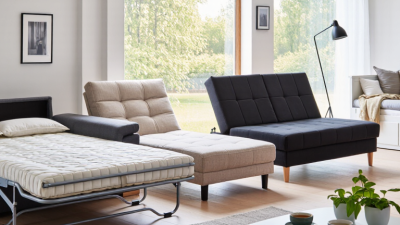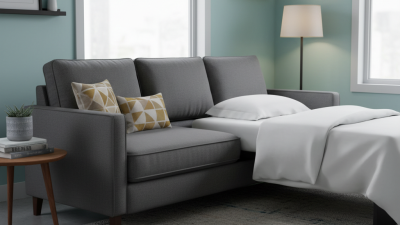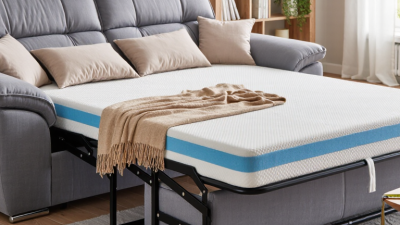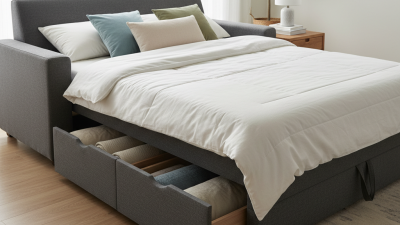


Our new Sales Gallery is located adjacent to our workshop in the Brooklyn Navy Yard. We are on the 6th floor of Building 280. Building 280 is right inside of the entrance at Flushing Avenue and Cumberland Street.

Please contact us to send an entry pass to your smartphone. Send request to [email protected] or call 212 620 4682. You can also register for a pass online.

How to Choose a Sofa Bed with Storage?

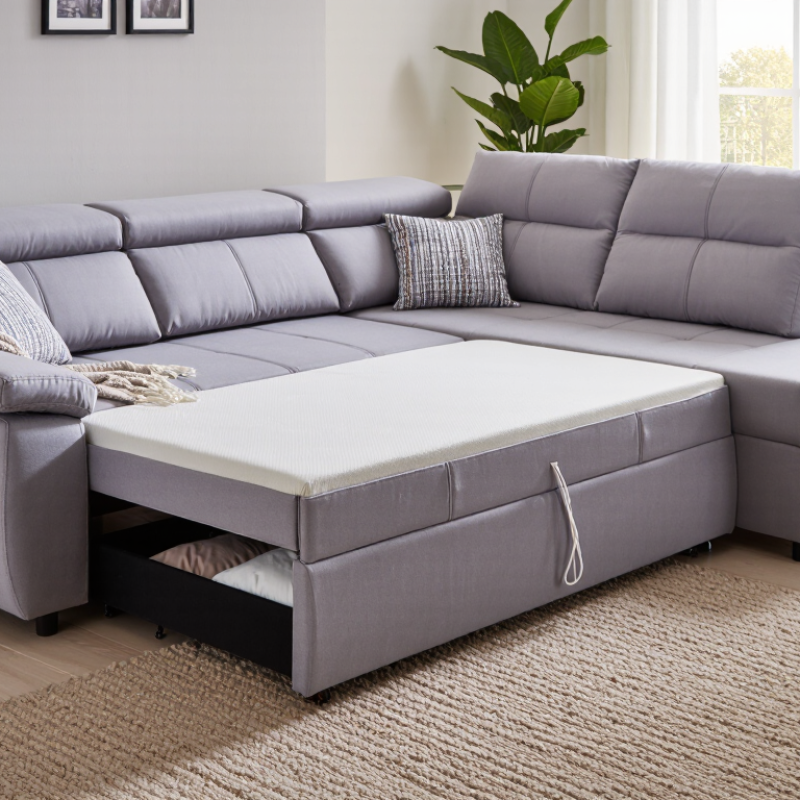
A sofa bed with storage promises two useful jobs in one footprint: a place to sit and sleep, plus a home for spare bedding. That combination matters in compact apartments, guest rooms, and homes where every cupboard already feels full. Yet convenience depends on details, not the product label. A deep storage compartment may be awkward to reach when the bed is open. A smooth-looking frame may also leave too little room for a comfortable mattress.

Home decisions often involve real budgets. The 2024 U.S. Houzz & Home Study reported that 54% of surveyed homeowners completed renovation projects in 2023, with a median spend of $24,000. This is not sofa-bed research, and it cannot tell shoppers which model will last. It does show why careful planning matters before spending on a home upgrade. Measure the room, doorways, and storage access. Then check the opened bed’s footprint, mattress dimensions, lifting mechanism, and stated weight limits.

Small details count. A lot. In this guide, we’ll compare storage styles, sleeping comfort, frame materials, and everyday usability. We’ll also flag trade-offs that product photos can hide, such as a bulky base or bedding that will not fit. No single sofa bed suits every home. The right choice depends on who will sleep on it, how often, and what you need to store. Even careful measurements can miss one thing: leave enough space to walk around the open bed.
How to Choose a Sofa Bed with Storage?

Match the Bed Size to U.S. Mattress Dimensions: Full 54 × 75 in; Queen 60 × 80 in

When choosing a storage sofa bed, start with the mattress size you can comfortably sleep on. A U.S. full mattress measures 54 × 75 inches, while a queen measures 60 × 80 inches. The queen adds six inches of width and five inches of length. Those inches matter when two people share the bed or someone sleeps with arms stretched out. Measure your room, too, including the space needed to pull the bed fully open.

A full can work well in a smaller guest room, but check the sleeper’s exact sleeping surface; sofa bed dimensions may not match standard mattress measurements precisely. A queen offers more room, yet its frame may leave less floor space for walking or opening nearby drawers. Check the storage compartment’s usable dimensions and whether bedding must be removed before folding the bed away. Try a paper outline on the floor. It can reveal an awkward fit before delivery. I would not rely on the size label alone; measure the actual bed and the clearances around it.
Measure Storage Volume, Access, and Room Clearance Before Comparing Models

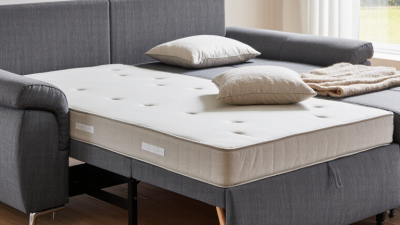
Measure the storage cavity itself, not the sofa’s outer frame. Multiply its usable width, depth, and height; divide cubic inches by 61 to estimate liters. Then compare that figure with real items: a folded duvet, two pillows, or a board-game box. Lids, hinges, and internal braces reduce usable space. Catalog volume can be optimistic.

Access matters as much as capacity. Check whether the compartment opens from the front, side, or lifted seat, and whether you can reach the back without unloading everything. The U.S. Access Board’s 2010 ADA Standards specify a 30-by-48-inch clear floor space; treat this as an accessibility benchmark, not a universal living-room rule. A 36-inch route is another useful reference when planning movement around open furniture.

Measure the bed fully extended, then mark its footprint with painter’s tape. Include the path needed to pull the mechanism out, nearby doors, and the coffee table’s final position. I would not trust a catalog diagram alone; it may simplify the hinge path. A few inches can matter. Recheck measurements after skirting boards and radiators are accounted for.

Compare Seat-Foam Density: 1.8 lb/ft³ Is a Common Furniture Benchmark

Seat-foam density is a useful clue when comparing sofa beds, but it is not a comfort score. A density of 1.8 lb/ft³ is a common furniture benchmark for seat foam. It describes the foam’s weight per cubic foot, not how soft or firm it feels. Two cushions at that density can feel quite different because their construction and support layers may vary. Check the product specifications, and ask whether the figure applies to the seat foam itself. Small detail. It matters.

Storage adds another point to inspect. Lift the seat or open the drawer, then look at how the cushion sits against the frame. A firm platform may support the foam, while a poorly supported area can feel uneven over time. If possible, sit in the same spot for several minutes, then lie down as you would when using the bed. Notice pressure under your hips and whether the seat springs back after you stand. A quick showroom test can mislead; comfort often becomes clearer at home. Foam density alone cannot predict lifespan, either. Cushion thickness, daily use, and the sleeper mechanism all affect how the sofa bed performs. Even a careful check has limits. The storage compartment can also reduce room for bedding, so measure your folded sheets before choosing.

How to Choose a Sofa Bed with Storage? — Compare Seat-Foam Density: 1.8 lb/ft³ Is a Common Furniture Benchmark

Seat-foam density Typical buying interpretation What to check for a sofa bed Storage considerations Best suited to
Below 1.5 lb/ft³ Lower-density foam; may lose support sooner with frequent use. Ask whether the seat has a supportive base layer and whether the foam is covered by a clear warranty. Check that the storage compartment does not press against or obstruct the seat-support structure. Occasional seating or lighter-duty use, provided the seat feels supportive in person.
1.5–1.79 lb/ft³ A mid-range density band; construction and foam quality still matter. Test the seat for even support and ask whether the listed density applies to the main seat cushion. Look for a lid or base that opens smoothly without shifting the cushions or frame. Moderate use when comfort, price, and storage are balanced.
1.8–1.99 lb/ft³ Around 1.8 lb/ft³ is a commonly cited benchmark for residential furniture foam; it is a useful comparison point, not a guarantee of lifespan. Confirm the density refers to the seat foam, not the back cushions or a different layer. Density alone does not tell you how firm the seat will feel. Check that the storage space is accessible and that the mechanism remains easy to operate with the sofa in its intended position. A practical starting point for comparing everyday-use options.
2.0–2.49 lb/ft³ Higher-density foam may offer better resistance to wear, depending on its formulation and construction. Compare comfort, cushion thickness, foam type, and warranty; higher density does not automatically mean a firmer feel. Inspect the frame and hinges as well as the cushion; storage hardware is a separate durability consideration. Frequent seating when the cushion feels comfortable and the overall construction is sound.
2.5 lb/ft³ and above High-density foam; performance varies by foam formulation, cushion design, and use. Try the sofa before buying, since density alone cannot predict comfort, firmness, or suitability for sleeping. Verify that the storage compartment size meets your needs and that the mechanism is easy to lift and close. Buyers prioritizing a higher-density seat cushion, subject to comfort and construction checks.
Any density: sofa-bed mattress Seat-cushion density is not the same as mattress comfort or mattress specifications. Ask for mattress dimensions, thickness, and construction separately; test the opened bed if possible. For a pull-out design, check the clearance needed to open it and whether stored items must be removed first. Anyone who expects to use the bed regularly or needs storage alongside a sleeping surface.

Note: Density is the weight of foam per unit volume, not a direct measure of firmness. The ranges above are comparison guidelines rather than universal grading standards; ask the seller for the specification of the exact foam layer and assess the sofa’s full construction.

Check Bed Mechanism Safety and Durability Against EN 1725

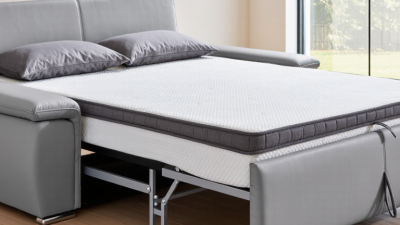
When choosing a sofa bed with storage, treat its opening mechanism as a safety-critical part, not a convenience feature. It should open smoothly, lock securely, and stay stable as the bed is unfolded. Small details matter. Check for exposed hinges, sharp edges, pinch points, and a frame that shifts under pressure. Try the mechanism more than once; a single smooth opening can hide a stiff or unreliable return.

EN 1725 sets safety, strength, and durability test requirements for beds. Ask whether the exact sofa-bed model, in its sleeping configuration, was assessed against the relevant edition. Request a test report, not just a label or verbal assurance. Check who carried out the testing, which components were included, and whether the storage compartment was considered. A standard is useful evidence, not a blanket promise.

Sofa-bed frames and folding hardware can differ from conventional beds, so ask what mechanism-specific checks were performed too. In a showroom, open and close the bed slowly, watching where the frame locks and where fingers could get trapped. Then test it with the storage compartment in its intended condition. It is easy to overlook this. A full drawer may affect balance, and that detail deserves a direct answer from the seller.

Verify Upholstery Care, Storage Weight Limits, and Warranty Coverage

Before choosing a sofa bed, read the upholstery care code on its label. ACT’s Upholstery Fabric Performance Guidelines use 30,000 Wyzenbeek double rubs as a high-traffic benchmark. That measures abrasion resistance, not stain resistance or easy cleaning. Check whether the fabric permits water-based cleaners, solvent-based cleaners, or vacuuming only. A pale woven fabric may look inviting, but spilled coffee can change the calculation.

Ask for the storage compartment’s maximum load in writing. ANSI/BIFMA X5.9 evaluates storage-unit strength and durability, but it does not provide one universal weight limit for every sofa-bed compartment. Confirm the rated load applies to the compartment floor, not just the frame. A stack of blankets is light; books or spare weights are not. Do not guess.

Read warranty terms for the frame, upholstery, hinges, and lift mechanism separately. Some coverage excludes fabric wear, stains, sagging, or damage from exceeding the storage limit. Check who pays return freight and whether labor is included. Small print matters. A long warranty can still leave gaps. I’d keep the care instructions and load rating with the receipt; forgetting where they went is an easy mistake.