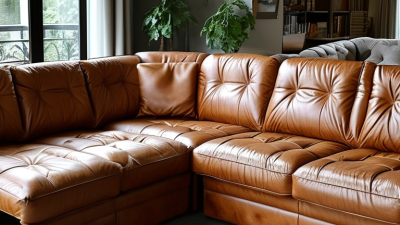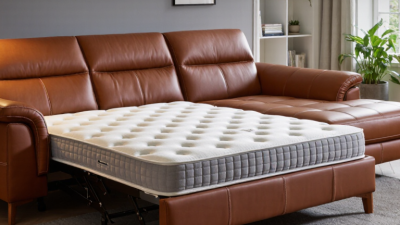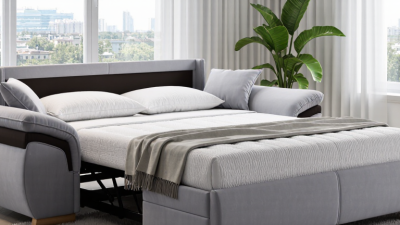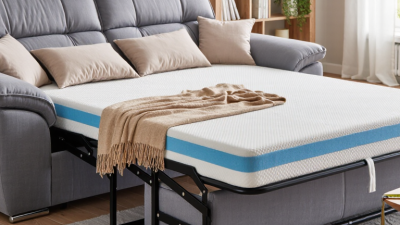


A leather sofa bed has to do two jobs well: anchor a living room by day and offer a usable sleeping surface at night. The best choice is not automatically the most expensive or the softest. It should suit the room, the people using it, and how often it will be opened. Designer and furniture maker William Morris offered a useful standard for furnishings: “Have nothing in your houses that you do not know to be useful, or believe to be beautiful.” His words are not sofa-bed advice, but they capture the balance this guide will examine.
Our 2026 comparison looks beyond polished product photos. We consider leather type, frame and mechanism details, mattress dimensions, seat comfort, care needs, and the space required when the bed is open. A narrow apartment may call for a compact pull-out; a guest room used every week may justify a thicker mattress and sturdier mechanism. Check the listed measurements carefully. A sofa that fits against the wall can still block a doorway when extended.
There are trade-offs. A supple finish may show scratches sooner, while firmer seating may feel less welcoming during a long evening. And specifications do not tell the whole story. This guide compares leading options using published details and practical buying criteria, while noting where information is limited. The right leather sofa bed depends on your priorities—not a single winner for every home.
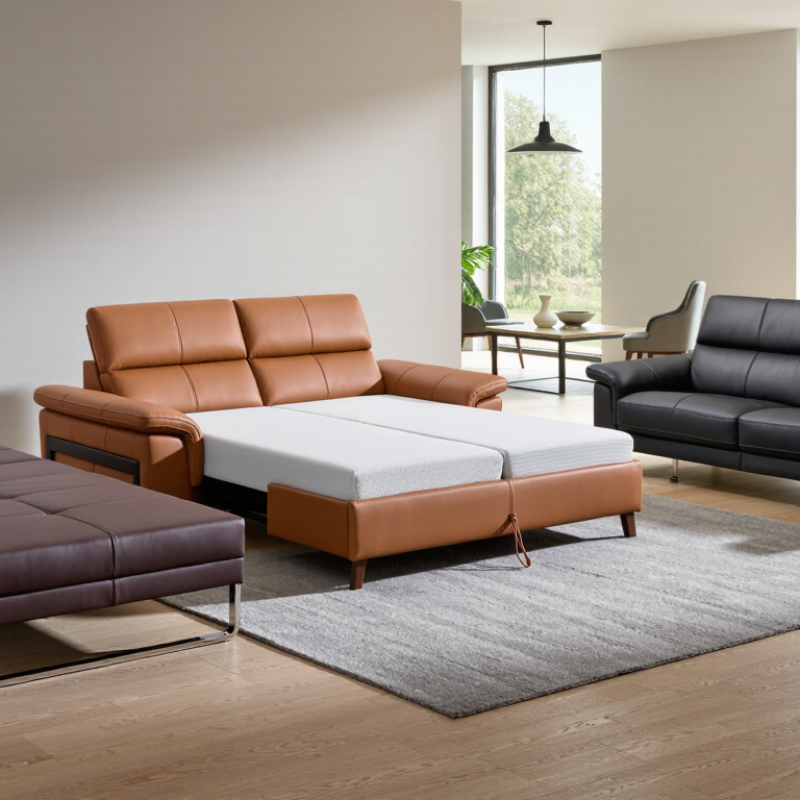
In 2026, a leather sofa bed is more than a couch with a pull-out frame. It combines a leather-covered seat with a sleeping surface designed for regular, practical use. The leather may be full-grain, top-grain, or bonded, and each type feels and wears differently. Check the product details rather than relying on the word “leather” alone. Look closely at seams, cushion support, and the frame. A sturdy mechanism should open smoothly without scraping the floor or requiring a hard tug.
Comfort matters in both modes. Sit on the sofa and notice whether the seat feels supportive, not just soft. Then check the bed’s dimensions and mattress thickness; a narrow sleeping area can surprise overnight guests. Measure the room with the bed fully extended, too. Small details count. A clear return policy and care instructions also help buyers judge what they are getting. Leather can age attractively, but sunlight, spills, and dry indoor air may affect its appearance. I still think showroom comfort can be misleading, because a few minutes of testing cannot predict a full night’s sleep.
Tips: Ask what kind of leather covers each surface, and test the opening mechanism in person if possible. Measure doorways and walking space before delivery. A sofa bed that fits the room but blocks a passage is a poor fit.
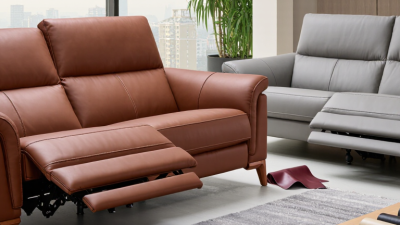
Leather type changes how a sofa bed feels after repeated folding. Full-grain leather keeps more of the hide’s natural surface, so marks and color variation remain visible. Corrected-grain leather has a more uniform finish and can be easier to wipe clean. “Genuine leather” alone does not identify its quality or construction. Ask about the finish, backing, and care instructions before buying.
Comfort depends on more than the label. A coated surface may feel firmer at first, while a softer finish can show scratches sooner. The Association for Contract Textiles recommends 30,000 double rubs for heavy-duty woven upholstery, but that benchmark is not a leather test. For leather, ISO 17076-2 specifies an abrasion-testing method. Ask sellers for relevant test results, not fabric numbers applied to leather.
Tips: Blot spills promptly with a clean cloth; don’t scrub. Keep the sofa bed away from direct sun and heat, which can dry or fade its surface. Follow the maker’s care guidance, especially for coated leather. A practical caveat: “low maintenance” rarely means maintenance-free. Check the hinge area and seat creases regularly; dust gathers there, and a sofa bed’s moving parts can make care less simple than it looks.
A sofa bed’s mechanism should match how often it will be used. A click-clack design folds the backrest flat and suits small rooms with limited floor clearance. Its sleeping surface can feel firm, so test it before choosing one for nightly use. A pull-out frame usually provides a separate mattress and may feel more familiar to overnight guests. It needs clear space in front, though, and its moving parts add weight. Check that the frame opens smoothly and does not scrape nearby furniture. No mechanism is perfect.
Room size matters as much as the sofa’s listed dimensions. Measure the wall, doorway, stair turns, and the open bed footprint before ordering. A compact two-seat model can work in a studio or home office, while a wider sofa bed gives couples more sleeping room if the layout allows it. Leave walking space beside the open bed; a tight passage quickly becomes annoying. For leather upholstery, also consider daily contact: a sunny window may warm the seat, and pets’ claws can leave marks. Small details, but they matter. Measure twice, then compare the usable mattress dimensions with the space available.
2026 Top Leather Sofa Beds Which One Is Best?
How to Compare Top Leather Sofa Beds for Everyday Use
A leather sofa bed must work as a seat by day and a bed at night. Grand View Research estimated the global furniture market at USD 647.3 billion in 2023. That figure describes the market, not product quality; a large market does not make every sofa bed durable. Compare seat depth, cushion support, and mattress dimensions in both configurations. Open and close the mechanism several times. It should move smoothly without scraping the floor or pinching fingers. ANSI/BIFMA X5.4 provides performance tests for public and lounge seating, including structural durability. Ask whether the frame and seating components have relevant test documentation.
Leather needs its own checks. ISO 11640 describes a rubbing test for leather colour fastness, while ISO 11644 covers adhesion of leather finishes. Ask for test results, not just terms such as “top grain.” Inspect seams around the arms and folding joints, where friction concentrates. Check the care instructions, too: sunlight and frequent cleaning can affect the finish. Measure the room with the bed fully open, then confirm there is a clear path around it. Comfort remains personal. I would test it in person, though even a short showroom sit cannot fully predict nightly use.
Compare standard sleeper mattress sizes to see how much sleeping space each sofa bed size can offer.
The chart uses standard mattress dimensions: twin 38 × 75 in, full 54 × 75 in, and queen 60 × 80 in. Actual sofa-bed mattress dimensions can vary, so check the product measurements before buying.
A leather sofa bed must work as both seating and a real sleeping surface. Measure the room with the bed fully open, then leave enough space to walk around it. Check the mattress thickness, support, and feel in person; a quick sit does not reveal pressure points after several hours. Try it open. If possible, lie down in your usual sleeping position and check whether the frame or hinges are noticeable.
The mechanism matters just as much. Open and close it several times, watching for snagging, uneven movement, or a mattress that shifts out of place. Ask whether replacement parts and mattress sizes are available. For upholstery, look closely at high-contact areas, seams, and corners. Full-grain leather can show natural marks, while coated finishes may be easier to wipe clean; neither choice guarantees better construction. Ask what care the leather needs, and whether the seller can document its material description.
Also consider indoor air and daily maintenance. The U.S. Environmental Protection Agency’s indoor-air guidance notes that concentrations of some pollutants can be two to five times higher indoors than outdoors. That figure is not specific to sofa beds, but it is a reason to ask about foam and finish emissions rather than relying on vague “low-odor” claims. Check the product’s test documentation, and remember that a strong smell alone cannot confirm safety. One overlooked detail: measure doorways and stair turns before delivery. A sofa bed that cannot reach the room is a costly mistake.