


Our new Sales Gallery is located adjacent to our workshop in the Brooklyn Navy Yard. We are on the 6th floor of Building 280. Building 280 is right inside of the entrance at Flushing Avenue and Cumberland Street.

Please contact us to send an entry pass to your smartphone. Send request to [email protected] or call 212 620 4682. You can also register for a pass online.

Why Choose Laminate Plank Flooring?

Laminate Plank flooring appeals to homeowners who want the look of timber without the cost or upkeep of solid hardwood. Its layered construction typically combines a photographic surface, a protective wear layer, and a stable core. Together, these layers can handle everyday foot traffic, chair movement, and the occasional dropped toy. A quick sweep often removes grit before it scratches the finish. Small details matter.

Style is another reason people consider it. Available designs range from pale oak tones to darker, more pronounced grain, while plank formats can make a narrow room feel more spacious. Many products use click-lock edges, which can simplify installation, though a level, clean subfloor remains essential. Check the manufacturer’s instructions for underlayment, expansion gaps, and room conditions before starting. Not every product suits every space.

The practical choice depends on more than appearance. Compare wear-layer specifications, warranty terms, and cleaning guidance, and confirm whether the selected flooring is rated for kitchens or other areas exposed to moisture. Laminate can resist everyday spills, but it is not automatically waterproof; standing water may damage seams or the core. That limitation deserves attention. With careful product selection and realistic expectations, Laminate Plank flooring can offer a durable, attractive surface for busy rooms—though it may not be the right fit for every home.
Why Choose Laminate Plank Flooring?

What Laminate Plank Flooring Is

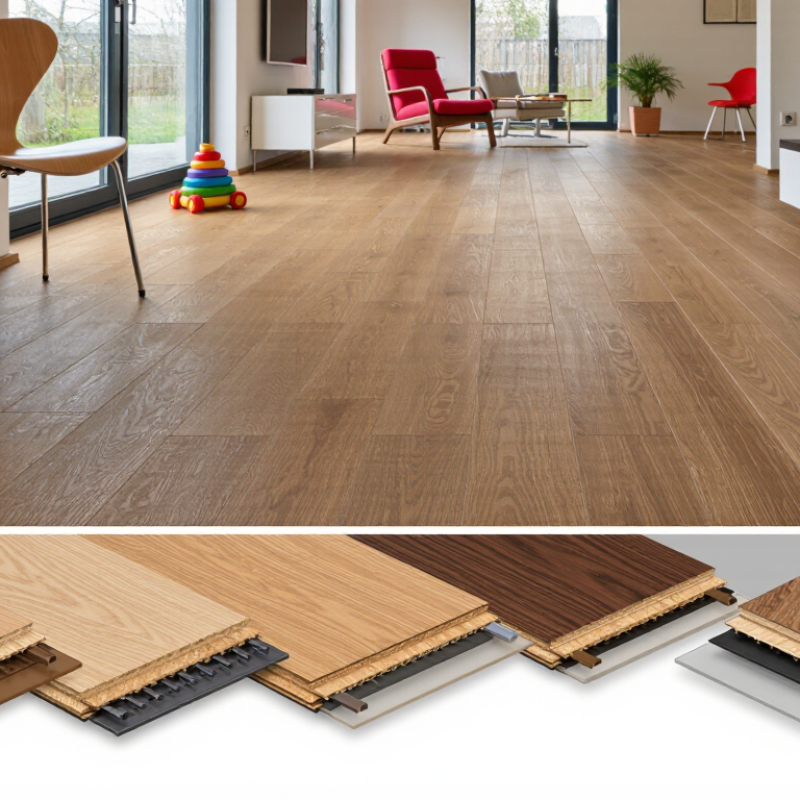
Laminate plank flooring is a manufactured floor covering designed to resemble wood. Each plank typically has a protective wear layer, a printed decorative image, and a dense fiberboard core. A balancing layer beneath helps support the plank. Exact construction varies, so the product’s technical details matter. The wood pattern is printed, not a slice of timber. That distinction matters. Laminate can offer consistent color and defined plank shapes, but its surface and feel are not identical to solid wood. Many products use click-lock edges and float over underlayment instead of being nailed down. Installation still requires a clean, level subfloor and space for expansion around the room’s edges.

The wear layer helps resist everyday scuffs, but it cannot make the floor indestructible. Wipe up spills promptly, especially near joints. Moisture resistance varies, and some cores can swell when wet. Check the installation and cleaning directions for the specific product, not just its sales label. In a room, the planks may sound firmer or hollower than expected. Underlayment can soften sound, but it will not fix an uneven base. Keeping a spare plank may help. Repairs can be awkward once a floating floor is locked in place, and matching a faded pattern later is not guaranteed.

Why Choose Laminate Plank Flooring? — What Laminate Plank Flooring Is
Dimension What It Means Practical Consideration
Basic definition Laminate plank flooring is a multi-layer floor covering made to resemble materials such as wood or stone. Its surface image is a printed decorative layer protected by a transparent wear layer. It offers the look of other materials without being a solid wood plank or a stone tile.
Typical construction Many products have a wear layer, a decorative image layer, a dense fiberboard core, and a balancing layer on the underside. Exact materials and construction vary by product. Check the product specification for its core material, total thickness, and surface protection.
Appearance Decorative designs can reproduce wood grain, color variation, and other visual details using a printed image. Some products also add surface texture. Compare samples in the room’s lighting; printed designs and textures differ between products.
Wear resistance The clear top layer helps protect the decorative layer from everyday abrasion. Durability depends on the product’s construction and its intended-use rating. Choose a product rated for the expected traffic, and use protective pads under furniture to reduce scratching.
Installation Many laminate planks use a click-lock joint and are installed as a floating floor, meaning the planks are joined to one another rather than fixed directly to the subfloor. A clean, dry, level subfloor and any specified underlayment are important. Follow the installation instructions, including expansion-gap requirements.
Moisture Standard laminate can be affected by standing water or moisture entering joints or the core. Some products have additional moisture-resistant features, but specifications vary. Do not assume a product is waterproof. Check its stated limitations and suitability before using it in kitchens, bathrooms, or other damp areas.
Cleaning and care Routine care commonly involves sweeping or vacuuming and cleaning with a laminate-compatible method. Excess water can damage some laminate floors. Wipe spills promptly and follow the floor’s care instructions; avoid soaking the surface or using abrasive tools.
Comfort and sound Underfoot feel and sound depend on the floor, underlayment, subfloor, and installation quality. Use only an underlayment approved for the specific flooring system, and check whether an attached pad is already included.
Best suited for Laminate can be a practical option for many dry, indoor areas when the product’s rating and installation requirements match the space. Confirm the manufacturer’s recommendations for the room, subfloor, traffic level, and moisture conditions before purchase.

How Laminate Planks Are Made and Installed

Laminate plank flooring is built in layers. A dense fiberboard core gives each plank its shape, while a printed décor layer creates the look of wood or stone. A clear wear layer protects the image from everyday scuffs. Some planks also include an attached backing pad. The edges are milled with locking profiles, so adjoining planks can click together without glue. The result can look convincing, though close inspection may reveal a repeated printed pattern.

Installation starts with the subfloor. It should be clean, dry, and flat; even small ridges can make joints flex or creak. Follow the flooring maker’s instructions for acclimation and underlayment, since requirements vary. Install planks as a floating floor, leaving the specified expansion space at walls and fixed objects. Stagger end joints, and use a tapping block rather than striking the locking edge directly. Measure twice. Doorways and narrow cuts can take patience, and my first layout would not always be the neatest one.

Tips: Check several cartons for pattern repeats before laying planks. Keep spacers in place, and trim door casings when needed for a cleaner fit. Don’t force a joint that resists; lift the plank and check its alignment.

Key Benefits of Choosing Laminate Flooring

Why Choose Laminate Plank Flooring?

Key Benefits of Choosing Laminate Flooring

Laminate plank flooring can give a room the look of wood without the upkeep of solid timber. Its layered construction usually includes a wear surface, a printed design, and a dense core. That structure helps resist everyday scuffs from shoes, chairs, and pet claws, though no floor is scratch-proof. Cleanup is simple: sweep grit often, then use a lightly damp mop. Less water is safer.

Many laminate planks click together over a prepared subfloor, making installation approachable for experienced DIYers. A level, dry base matters; small dips can lead to movement or creaking. The surface also feels consistent underfoot, and a suitable underlay can soften sound. Still, laminate may sound harder than carpet, and standing water can damage some products. That limitation is easy to overlook when a sample looks convincing. Check the care instructions and room suitability before buying.

Tips: Keep a few spare planks for repairs. Use felt pads beneath chair legs, and wipe spills promptly. Compare wear ratings, thickness, and moisture guidance—not just the sample’s color. A tiny swatch can look different beside a large window.

Limitations and Practical Trade-Offs

Why Choose Laminate Plank Flooring?

Limitations and Practical Trade-Offs

Laminate can mimic timber convincingly, but its layered construction has limits. Water is the main one. Spills left at plank joints may swell the core, and damaged edges are difficult to repair invisibly. A damp mop is usually safer than a wet one. Bathrooms and laundry areas need careful product selection and installation; “water-resistant” does not mean waterproof.

Wear ratings also need context. EN 13329, the European laminate-flooring standard, defines six abrasion classes, from AC1 to AC6. That scale measures surface abrasion performance, not resistance to every kind of damage or a guaranteed service life. A chair castor can still stress joints, while grit near an entry can act like sandpaper. Use felt pads, clean grit promptly, and check the rating against room use. Small habits matter.

There are quieter trade-offs. Floating planks can sound hollow over an uneven subfloor, and thin underlay cannot fix poor preparation. Deep scratches and chipped corners rarely disappear with sanding, unlike damage to some solid wood floors. Sunlight may also shift the appearance over time. I would not choose solely from a showroom sample; inspect a full plank under your room’s lighting. That extra check is easy to skip—and worth reconsidering.

Where Laminate Plank Flooring Works Best

Why Choose Laminate Plank Flooring?

Where Laminate Plank Flooring Works Best

Laminate plank flooring suits busy living rooms, hallways, and bedrooms, where shoes, chair legs, and daily foot traffic test the surface. Its sealed wear layer helps resist scuffs and stains, while plank patterns can add visual warmth without solid wood. NALFA’s laminate certification program evaluates performance areas such as abrasion, impact, staining, and water resistance. Check the product’s test information and installation instructions; performance varies. In kitchens, wipe spills promptly and use mats near sinks. Still, not waterproof.

Stable indoor conditions matter. The U.S. Environmental Protection Agency’s Moisture Control Guidance recommends keeping indoor relative humidity below 60%, ideally between 30% and 50%. That range can help reduce moisture-related problems around flooring, though it cannot fix a damp subfloor. Laminate can work well in dry, temperature-stable home offices and upper-floor rooms. It is a less reliable choice for bathrooms, laundry rooms, or entries where wet shoes leave puddles. I would not treat a water-resistance rating as permission to ignore leaks. A small oversight at a plank joint can become an expensive repair.